
Images, location, and responses collected
Storefront, interior, stocking, and display images are captured and geo-tagged, alongside structured questionnaire responses from the shop owner.
Most field data ends up as photos and forms nobody has time to analyse. Sekel's Geo Task Intelligence uses generative AI to score every store visit for retail potential, cross-verifies shop owner data against real databases, and turns thousands of visits into a market expansion plan.
The problem
Field reps capture photos and fill out visit forms, and that data sits in a folder. Verifying a shop owner's identity, GST registration, or credit history means separate manual checks with separate systems. Deciding where to open the next outlet in a city comes down to gut feel, because nobody has connected the visit data to actual market gaps or competitor presence.
How it works
Every visit feeds the same intelligence layer, so individual field data compounds into insight at the city and territory level.
Storefront, interior, stocking, and display images are captured and geo-tagged, alongside structured questionnaire responses from the shop owner.
Storefront, interior, and stocking images are scored automatically for retail potential, with no manual review needed.
Define exactly what makes an outlet high potential, minimum display area, stock levels, and let every image be judged against it consistently.
Cross-verify shop owner identity and business legitimacy against Aadhaar, GSTIN, CREDAI, and financial history in one flow.
Standardised questions collect unbiased shop owner responses, removing the variation that comes from an open-ended conversation.
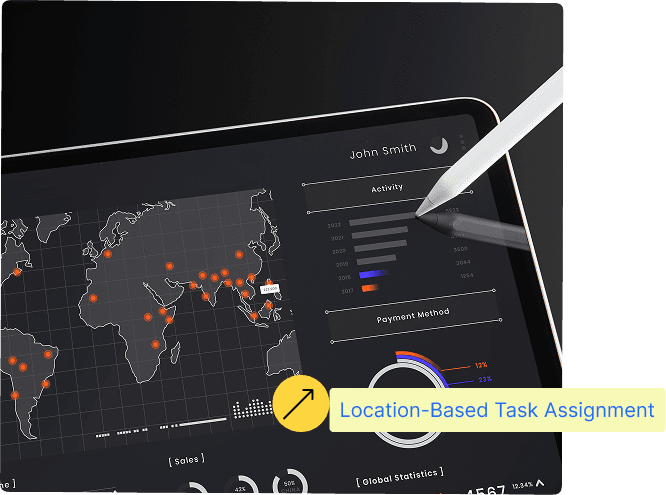
See competitor outlets plotted alongside your own network, so territory gaps and overlaps are visible at a glance.
Understand how well a city or territory is actually covered, and where retail point density falls short of the opportunity.
Images, location data, and questionnaire responses combine into a complete visit report automatically, no manual write-up required.
AI forecasts likely outlet performance based on visual and business data, helping prioritise which prospects to pursue first.
Defines business rules for classification once, and sees every incoming visit scored consistently against them.
Uses market reach and competitor mapping to decide where the next retail point should actually go.
Refines AI classification models using real field data instead of building rules in isolation from what's actually happening.
Draws on validated store and market data to plan campaigns based on where real opportunity exists.
Captures visit data once, and never has to write a manual field report again.
Sees market coverage and expansion opportunity as a single view, backed by verified data instead of regional estimates.